
For most American buyers, the Athens Riviera makes sense for one of three very different reasons: a Mediterranean second home, a longer-term relocation base, or a capital-city property investment. The correct area - and even the correct property type - changes depending on which of those three is actually driving the purchase.
That distinction matters because Americans face a different ownership context from EU buyers. U.S. citizens can buy property in Greece, but owning a home does not by itself extend ordinary Schengen visitor time, remove U.S. tax filing obligations or make every Athens Riviera property suitable for Greece's investor-residence programme.
American interest is also rising quickly. Specialist-broker data reported by eKathimerini showed demand for Greek holiday homes from U.S. and Canadian buyers up 50% in the first half of 2026. About 30% of those North American buyers were second- or third-generation Greeks. That is company data rather than a national transaction count, but it shows that North American demand is no longer peripheral.
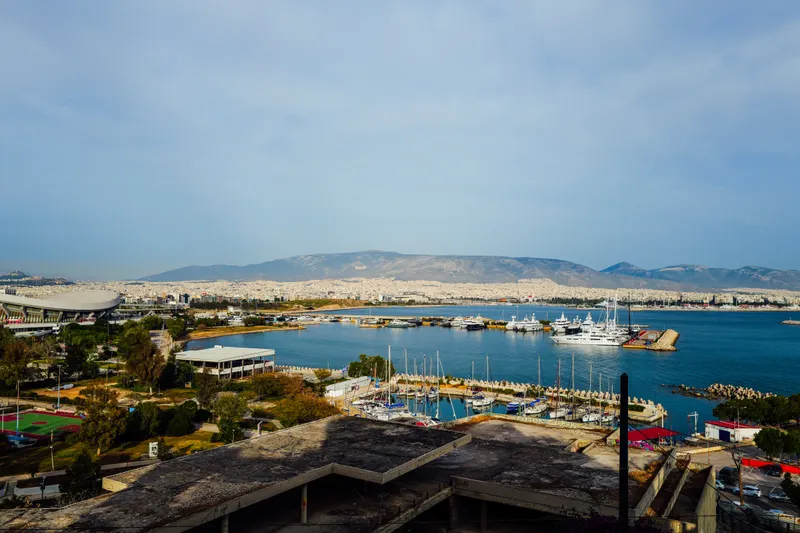
The Athens Riviera is particularly relevant because it combines a major capital, more than 40 kilometres of metropolitan coastline, a growing luxury market and the redevelopment around The Ellinikon. For a high-value American buyer, it can function as something between a city residence and a Mediterranean second home rather than forcing a choice between the two.
The Short Answer: Match the Area to the Use Case
| American buyer profile | Best first shortlist | Why | Main caution |
|---|
| Second home for several trips a year | Glyfada, Voula, Vouliagmeni | Easy coastal lifestyle with restaurants, beaches and services | Do not overpay for sea proximity if you will rarely use the property |
| Long-stay or relocation buyer | Glyfada, Voula, selected Ellinikon | Strong year-round services, city access and newer residential options | Residence and tax planning must be solved separately from the property |
| Luxury lifestyle buyer | Vouliagmeni, Kavouri | Scarce coastline, premium hospitality, privacy and high-end homes | Entry prices are very high and property choice is narrower |
| New-build / regeneration buyer | Ellinikon, Glyfada, nearby coastal districts | Modern specification and exposure to major infrastructure investment | Launch pricing, construction phases and future competing supply |
| Investment-led buyer | Glyfada, Voula, Ellinikon; selected Alimos/Palaio Faliro for broader budgets | Year-round demand base plus coastal appeal | Rental rules, service costs and exit liquidity matter more than brochure yield |
| Golden Visa-led buyer | Qualifying Attica property only after legal screening | Attica remains eligible under current investor-residence rules | The standard threshold is high and qualifying conditions are property-specific |
The strongest American-buyer strategy is to decide which row describes you before viewing anything. A property cannot be optimized simultaneously for occasional holidays, permanent family life, maximum rental income, Golden Visa eligibility and minimum maintenance.
Why Americans Are Looking at Greece More Seriously in 2026
The current interest is not based only on lifestyle marketing. Greece's luxury housing market has been drawing larger international budgets. Greece Sotheby's International Realty reported €6.11 billion of expressed buyer demand in the first half of 2026, up 35% year on year across its own channels, with the Athens Riviera its fastest-growing enquiry segment.
The same report placed the median value per luxury-property enquiry at €2.95 million, up from €2.30 million a year earlier. Those are proprietary enquiry figures, not completed national sales, but they matter because they show the budget level at which international buyers are now engaging with the prime Greek market.
The broader Athens market is also still appreciating. The Bank of Greece estimated Athens apartment prices were 5.0% higher year on year in the second quarter of 2026. That is a city-wide bank-valuation index, not an Athens Riviera asking-price index, and should not be used to value an individual coastal property.
For American buyers, the most useful conclusion is not that prices must keep rising. It is that the Riviera is no longer a quiet value market waiting to be discovered. Prime property already carries a global-buyer premium, so selection and price discipline matter.
Do Not Assume the Athens Riviera Is Cheap Because It Is Greece
At the luxury end, the Athens Riviera can surprise buyers arriving with a national-average view of Greek property. Greece Sotheby's placed the median asking price of its active Riviera luxury inventory at roughly €10,000 per square metre in the first half of 2026, with branded off-plan product extending materially above that level.
That is a specialist luxury-inventory measure, not a completed-sale average for every apartment in the southern suburbs. Older apartments away from the seafront can sit far below it; newly built penthouses, exceptional villas and branded residences can sit far above it.
The practical point is that an American buyer should arrive with an all-in budget rather than a vague idea that Athens is less expensive than Miami, New York, Los Angeles or other Mediterranean luxury markets. The strongest areas have already been repriced by international demand and new development.
Second Home: Glyfada and Voula Are the Most Practical Starting Points
For a buyer who expects to use the property for several weeks or a few months each year, Glyfada and Voula provide the easiest starting comparison.
Glyfada has the strongest urban-coastal feel. Restaurants, retail, cafés, golf, the waterfront and a substantial year-round population make it easier to arrive and use the property without the area feeling seasonal. It is particularly logical for an apartment or penthouse buyer who wants the home to be part of an active neighbourhood.
Voula generally shifts the balance toward residential calm while remaining connected to Glyfada and central Athens. It can suit buyers who want a larger apartment, maisonette or lower-density setting without moving into the price and scarcity of Vouliagmeni.
For an American second-home owner, the decision between them is often less about which area is more prestigious and more about the weekly routine. If you expect to walk to dinner frequently and want activity outside the door, Glyfada is the easier fit. If you want a quieter residential base and are comfortable with slightly more driving, Voula can be stronger.
This article deliberately does not turn that choice into a detailed Glyfada-versus-Voula ranking because the two areas contain very different micro-locations and property types. The exact street, building, parking, noise and walking route can reverse the area-level answer.
Vouliagmeni and Kavouri: Buy for Scarcity, Not for Value
Vouliagmeni is the Riviera's premium lifestyle market. It appeals to buyers who want a more exclusive coastal environment, top hospitality, marina access, beaches and a property whose location itself is part of the luxury proposition.
For an American buyer with a multi-million-euro budget, this can make sense as a personal-use asset where privacy, view and scarcity matter more than rental yield. It is a weaker fit for somebody trying to maximize square metres or buy a high-yield investment.
Kavouri sits within the same high-value coastal logic. In both locations, the buyer should demand something genuinely difficult to reproduce: a defensible sea view, exceptional terrace, strong walkability, privacy, rare frontage or architectural quality.
Paying a premium simply because a listing carries the Vouliagmeni label is not enough. At this level, road position, neighbouring plots, future construction, building quality and legal/technical due diligence can move value by far more than the difference between two area averages.
Ellinikon: The Strongest Development Story - and the Easiest Place to Overpay for the Story
The Ellinikon redevelopment is one of the main reasons the southern Athens market is receiving global attention. The official masterplan covers roughly 6.2 million square metres of the former airport and coastal front, with homes, parks, retail, offices, hospitality, sports, education and new waterfront infrastructure.
For an American buyer who wants modern construction, concierge-style services and a lower-maintenance property, the new residential supply can be attractive. It can also suit a relocation buyer who wants a newly built home rather than taking on a renovation project in an older apartment block.
The risk is valuation. A branded or off-plan property can include premiums for specification, brand, amenities and the future district rather than only the physical apartment. That may be justified, but the buyer should know exactly what part of the price is being paid for something that exists today and what part depends on the completed future environment.
- Ask what phases will still be under construction when you expect to occupy the property.
- Compare service and community charges with a high-quality resale alternative.
- Check the payment schedule, guarantees, completion obligations and remedies with an independent Greek lawyer.
- Do not value a future sea view as protected unless the planning position supports that assumption.
- Model resale competition from similar units that may complete in the same period.
Relocation: Property Is the Easy Part; Residence and Tax Are the Harder Parts
An American can buy an Athens Riviera home without becoming a Greek tax resident or long-term Greek resident. Those are separate legal decisions.
For ordinary tourism or business visits, U.S. passport holders can generally stay in the Schengen Area for up to 90 days in any 180-day period. Buying a €500,000, €1 million or €5 million home does not extend that visitor allowance by itself.
If the real objective is to live in Greece for longer periods, the buyer needs a residence route that matches the situation. For some high-value buyers that may be the property-linked Golden Visa. Others may qualify under different residence categories. The property search should not begin until the intended residence route has been checked if long-term occupation is essential.
The same separation applies to tax residence. Greece can treat an individual as tax resident based on permanent or principal residence, habitual abode, centre of vital interests or, subject to exceptions, presence exceeding 183 days during a twelve-month period. An American buyer who starts spending most of the year in Greece should not assume that keeping a U.S. address prevents Greek tax residence.
Golden Visa: The Athens Riviera Is in the €800,000 Standard Zone
At the time of research in October 2026, the standard property route for Greece's investor residence programme sets the minimum real-estate investment at €800,000 in the entire Attica region, which includes the Athens Riviera.
Under the standard route, the investment must be made in a single property and the main-space area must be at least 120 square metres. Separate €250,000 routes remain available for specific categories, including qualifying change-of-use property and certain listed buildings, subject to their own conditions.
The investor residence permit is issued for five years and can be renewed while the qualifying investment is maintained. It does not by itself provide a right to employment.
There is also an important rental issue: current rules prohibit using property acquired for the investor-residence programme for short-term rental. That matters to an American buyer who is trying to combine a Golden Visa with an Airbnb-style investment thesis.
The practical conclusion is that a Golden Visa property should first be screened by an immigration lawyer and property lawyer for current eligibility. Do not choose a home at €800,000 simply because the asking price reaches the threshold. The property still has to be good real estate after the immigration benefit is removed from the analysis.
High-Net-Worth Relocation: Greece's Non-Dom Regime Can Matter - but U.S. Tax Still Follows You
Greece also operates special tax regimes designed to attract new tax residents. Under Article 5A, qualifying high-net-worth individuals can transfer tax residence to Greece and, subject to the rules, pay a lump-sum €100,000 annual Greek tax on foreign-source income for up to 15 tax years. The current framework requires, among other conditions, a minimum €500,000 investment.
For many European buyers, that can be a major relocation incentive. For an American citizen, it needs a second layer of analysis because the United States generally taxes its citizens on worldwide income even when they live abroad.
In other words, a favourable Greek regime does not switch off U.S. federal filing obligations. Foreign tax credits and treaty provisions can reduce double taxation in some circumstances, but the result depends on income type, residence, entities, investments and personal facts.
A high-net-worth American should therefore model Greek and U.S. tax together before deciding that Athens Riviera relocation is tax-efficient. The property is only one component of that decision.
U.S. Tax: Owning Greek Real Estate Does Not End American Reporting
This is one of the most important differences for American buyers. The IRS states that U.S. citizens and resident aliens abroad are generally subject to U.S. tax on worldwide income.
If an Athens Riviera property is rented, the rental income can therefore create filing and tax consequences in both Greece and the United States. Foreign tax credits may be available where qualifying Greek tax has been paid, but the calculation should be handled by a professional who works with U.S.-Greek cross-border cases.
Directly owned foreign real estate is not itself a specified foreign financial asset that must be reported on Form 8938, and real estate is not a foreign financial account for FBAR purposes. That changes if the property is held through a foreign company, partnership, trust or other entity, because the interest in that entity may create separate U.S. reporting.
A Greek bank account can also matter. An FBAR is generally required when the aggregate value of a U.S. person's foreign financial accounts exceeds $10,000 at any time during the calendar year. The threshold is for the accounts, not the property value.
This is why ownership structure should be chosen before signing. Do not create a Greek company merely because somebody says it is "better for tax" without having both Greek and U.S. advisers review the consequences.
Greek Purchase Costs: Start With 3.09% Transfer Tax, Then Add the Rest
Greece's official real-estate transfer tax is 3% of the taxable value. A municipal levy equal to 3% of that main tax is added, producing an effective headline rate of approximately 3.09% where transfer tax applies.
On a €1 million taxable value, that headline transfer tax and municipal levy would be approximately €30,900. On €2 million, approximately €61,800. These examples exclude notary, registration/cadastre, legal, technical, finance and other transaction costs.
Greece has extended the suspension of VAT on qualifying new buildings to 31 December 2026 where the developer has opted into the suspension regime, in which case property transfer tax applies instead of VAT. This is particularly relevant on the Athens Riviera because new-build and off-plan stock forms a large part of the current luxury market.
An American buyer also needs a Greek tax identification number before purchase. After acquisition, foreign residents are required to declare Greek real estate through the E9 system and are subject to annual ENFIA property tax according to the applicable rules.
The all-in budget should therefore be set before property viewings. A buyer whose maximum total cash commitment is €1 million should not ask an agent to show €1 million properties.
Second Home vs Relocation vs Investment: What Changes in the Property Brief?
| Decision factor | Second home | Relocation | Investment |
|---|
| Location priority | Beach, dining, airport practicality, lock-up-and-leave use | Schools/healthcare/work routes, year-round services, daily traffic | Tenant demand, resale depth, competing supply |
| Property type | Apartment/penthouse or low-maintenance villa | Larger apartment, maisonette or family home with storage/parking | Unit type with broad tenant and buyer audience |
| Residence planning | Usually visitor rules unless another permit exists | Essential before purchase if stays will exceed visitor limits | Relevant if Golden Visa is part of the thesis |
| Tax planning | Greek ownership taxes plus U.S. reporting | Greek tax residence may become relevant; U.S. worldwide tax continues | Greek rental tax, U.S. rental reporting and entity structure |
| Maintenance tolerance | Low is usually better | Can accept more if occupied year-round | Must be priced into net return |
| Best area bias | Glyfada, Voula, Vouliagmeni | Glyfada, Voula, selected Ellinikon | Glyfada, Voula, Ellinikon; broader coast depending on budget |
This is the core of the article: the same €1.5 million buyer can reasonably purchase three completely different Athens Riviera properties depending on whether the objective is six weeks of personal use, full-time family life or a ten-year investment.
Investment Buyers Should Be More Skeptical of Gross Yield Than Holiday Buyers
The Athens Riviera has attractive rental narratives: professionals, executives, relocation households, high-end visitors and demand linked to new development. None of those automatically creates a strong net yield.
For a specific property, start with achievable rent rather than advertised rent. Then deduct vacancy, management, common charges, insurance, maintenance, furnishing replacement and applicable Greek tax. If the property is part of a highly serviced new development, annual charges can materially change the return.
An American investor also has to model the U.S. side. A Greek rental statement that looks attractive before U.S. reporting, currency movements and cross-border advice is incomplete.
If the main reason for purchasing is the Golden Visa, do not assume short-term rental can rescue a low long-term yield. Current investor-residence rules restrict short-term rental of qualifying property.
New Build or Resale? Americans Often Underestimate the Resale Advantage
New-build property can feel simpler to an overseas buyer: modern systems, parking, energy performance, concierge services and a clear specification. On the Athens Riviera, that convenience is being sold at a premium.
A resale property can offer a different advantage: the street, neighbouring buildings, noise, view, management and running costs already exist and can be inspected. A well-renovated resale in Glyfada or Voula can sometimes be a more defensible purchase than paying a major launch premium for a project whose surrounding environment is still changing.
- For new build, compare the contract specification with the marketing material and identify what is excluded.
- For off-plan, have payment protections, completion obligations and delay remedies reviewed independently.
- For resale, verify title, building permits, horizontal-property documentation, alterations and any community debts.
- Commission a technical inspection appropriate to the age and construction of the property.
- For both, ask what the property will compete against when you sell in five or ten years.

American Families Should Test the Weekday, Not the Weekend
Relocation buyers often fall in love with the Riviera on a weekend and discover the real decision on a Tuesday morning. For a family, the correct property can be determined by school commute, office access, airport use, medical appointments and the time required to cross the southern suburbs at peak hours.
This is why a beautiful Vouliagmeni property is not automatically the best relocation home, and a central Glyfada apartment is not automatically the most convenient. The family's actual school, work and activity map should be plotted before the final shortlist.
Spend at least one viewing day driving the routes you would repeat every week. Check parking, building access, evening noise, grocery options and whether the area still feels practical outside the holiday season.
What an American Buyer Should Verify Before Reserving a Property
- Greek tax identification number and the transaction process required for a non-resident buyer;
- registered ownership, title history and any mortgages, liens or other encumbrances;
- building permits, planning status and whether extensions or alterations are documented correctly;
- land-registry/cadastre position and whether the property description matches what was viewed;
- community regulations, service charges, reserve funds and planned major works;
- independent technical inspection, especially for older or heavily renovated property;
- full acquisition-cost estimate using the correct tax treatment for that specific property;
- residence-permit eligibility if the purchase is connected to immigration;
- short-term rental eligibility if income is part of the plan;
- U.S. and Greek tax consequences of personal ownership versus any proposed company or other structure.
The selling agent can coordinate a transaction, but legal, tax, immigration and technical advisers should be independently accountable to the buyer.
Which American Buyer Fits Glyfada Best?
Glyfada is the strongest default shortlist if you want the property to work easily from the first day.
- You want a premium apartment or penthouse rather than a large villa.
- You expect to walk to restaurants and shops regularly.
- You plan several stays each year or a gradual move toward longer occupation.
- You want a future resale audience that includes both Greek and international buyers.
- You value city access as much as beach access.
- You do not want the property to depend entirely on a resort or seasonal rental market.
Which American Buyer Fits Voula or Vouliagmeni Better?
Voula is stronger when the buyer wants more residential calm and space while remaining connected to Glyfada. Vouliagmeni is stronger when the buyer is consciously paying for prime lifestyle scarcity.
- Choose Voula if family use, larger layouts and a quieter residential environment matter more than maximum walkability.
- Choose Vouliagmeni if budget is high, personal use dominates the decision and a rare coastal address is part of the reason for buying.
- In either area, do not pay a sea-view premium without checking the future building context and what the main living spaces actually see.
Which American Buyer Fits Ellinikon Better?
Ellinikon suits a buyer who is comfortable purchasing into a transformation rather than only into an established neighbourhood.
- You prefer new construction and modern amenities over traditional neighbourhood character.
- You are comfortable underwriting construction phases and future supply.
- You want a low-maintenance property that can support long stays or relocation.
- You are prepared to test the new-build premium against strong resales in Glyfada and Voula.
- You view the redevelopment as a long-term district-quality catalyst, not as a guarantee of short-term price appreciation.
A Better Viewing Plan for an American Buyer
A serious viewing trip should compare uses, not simply neighbourhood names.
- Glyfada: one established premium resale and one newer or recently completed apartment.
- Voula: one larger residential apartment or maisonette with parking and outdoor space.
- Vouliagmeni/Kavouri: one property that demonstrates what the prime-location premium actually buys.
- Ellinikon: one current new-build or off-plan option with a complete cost and service-charge schedule.
- For every property, record the same data: all-in acquisition estimate, annual building costs, tax treatment, legal status, parking, usable terrace, noise, walkability, airport route, residence eligibility if relevant, rental restrictions and likely future buyer.
After four or five deliberately different properties, most buyers understand the market better than they do after months of browsing international portals.
The Decision: Buy the Property for the Life You Will Actually Lead
For an American buyer, the Athens Riviera is strongest when the property, residence plan and tax plan are treated as three separate decisions that must eventually fit together.
For a second home, Glyfada and Voula are the most practical starting points, with Vouliagmeni reserved for buyers who deliberately want a premium lifestyle address. For relocation, Glyfada, Voula and selected Ellinikon properties deserve priority because year-round convenience matters more than holiday atmosphere. For investment, the correct answer depends on achievable rent, running costs, future supply and exit demand rather than a headline yield.
Americans also need to keep two additional filters in the process. First, ordinary Schengen visitor limits still apply unless you have a residence right. Second, U.S. worldwide-tax and foreign-account reporting rules can continue even after you move to Greece.
Before requesting listings, define the maximum property price, maximum all-in budget, apartment or villa, minimum bedrooms and internal area, intended annual use, whether relocation is realistic, whether Golden Visa eligibility matters, new build or resale, rental importance and purchase timeframe.
Contact AntalyaEstate with that brief. AntalyaEstate can help refine the Athens Riviera search and, where appropriate, introduce a trusted local property partner for current options. Property-specific Greek legal, tax, immigration and technical advice - and U.S. cross-border tax advice - should remain with the appropriate independent professionals before money is committed.