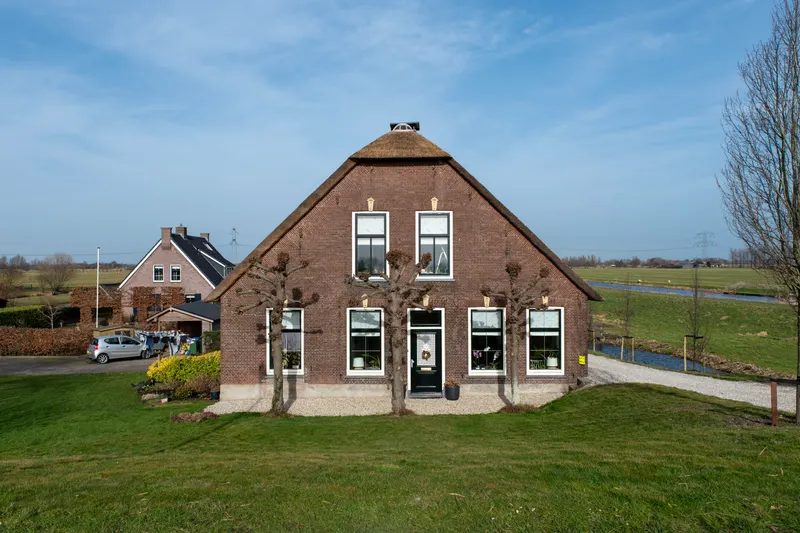
Dutch demand in Alicante province is no longer a niche trend. In the second quarter of 2026, buyers from the Netherlands accounted for 6.94% of all foreign home purchases registered across Spain, almost level with British buyers at 6.99%. Alicante was simultaneously the most international province in the country: foreign buyers represented 46.43% of its registered home purchases.
Search behaviour points in the same direction. Idealista's latest nationality data show Dutch users as the largest foreign audience looking at homes in Alicante province, representing roughly one in six foreign listing views. Jávea/Xàbia is particularly prominent, while Torrevieja, Moraira and Calpe also attract strong Dutch interest.
But that does not mean Dutch buyers should all search the same towns. The province contains several very different property markets. A buyer who wants a detached villa for long stays should not use the same shortlist as a couple relocating for year-round city life, and a €300,000 apartment search should not be routed through the same locations as a €1 million-plus villa brief.
The useful question is therefore not "Why are Dutch buyers choosing Alicante?" The evidence already shows that many are. The better question is: which part of Alicante province best fits the way you intend to use the property?
The Short Answer: Start With Your Buyer Type, Not the Famous Town Name
| Buyer profile | Best starting areas | Why | Main trade-off |
|---|
| Villa-led second home | Jávea/Xàbia, Moraira | Strong villa stock, outdoor living, international demand | Higher asking-price level and greater car dependence |
| Premium coastal apartment or penthouse | Calpe, Jávea, Playa de San Juan | Sea views, modern apartments, beach access | Prime positions can be expensive |
| Year-round relocation | Alicante city, Playa de San Juan, Dénia | Urban services, healthcare, shopping and a stronger everyday-life base | Less resort-villa feel |
| Value-led second home | Torrevieja, Orihuela Costa | Lower area-level asking prices and broad international stock | More competition between similar apartments and developments |
| Quieter high-end villa purchase | Moraira and selected north-Costa Blanca locations | Low-density feel, private villas, strong foreign demand | Smaller market and premium pricing |
These are starting points, not verdicts. A well-bought property in the "second choice" area can be better than a weak property in the supposedly ideal one.
Why Alicante Province Is Such a Strong Dutch Market
The official transaction data are unusually clear. Spain's Property Registrars recorded 12,298 home purchases in Alicante province during the second quarter of 2026. Foreign buyers accounted for 46.43% of those transactions, the highest provincial share in Spain.
At national level, Dutch purchasers had become the second-largest foreign nationality in the same quarter, with a 6.94% share of foreign purchases. That is completed registered transaction data, not web traffic or estate-agent enquiries.
Idealista's search data add a different layer. Dutch users produced 16.54% of foreign property views in Alicante province in its coastal-demand study, making the Netherlands the largest foreign search market for the province. This does not prove that 16.54% of completed foreign sales are Dutch; it shows where online buyer attention is coming from.
The distinction matters. Registered sales demonstrate real market participation. Search data show where future demand may be developing. Both point to Alicante as a market where Dutch buyers are structurally important rather than occasionally visible.
First Decision: Costa Blanca North or Costa Blanca South?
For most Dutch buyers, the Alicante decision becomes easier once the province is divided into two broad search zones.
Costa Blanca North: Higher Prices, More Villa-Led Searches
Jávea/Xàbia, Moraira, Dénia and Calpe sit in the northern half of the province and attract buyers who put more weight on scenery, detached homes, terraces, sea-and-mountain views and established international residential communities.
The north is not uniformly luxurious, and each town has apartments as well as villas. But the property search is generally more compatible with a buyer who wants the home itself - the plot, view, pool and outdoor living - to be a major part of the reason for owning in Spain.
Costa Blanca South: More Entry Points and More Development Choice
Torrevieja and Orihuela Costa operate differently. There is a much larger concentration of apartments, townhouses, urbanisations and new-build developments at a broader spread of price points. International ownership is deeply embedded in the market.
For a buyer who wants a lower capital commitment, simple lock-up-and-leave ownership or a property that can be used without maintaining a large plot, the south deserves serious attention. The compromise is that some locations feel more development-led and more seasonal, and similar units can compete heavily with each other when the owner eventually resells.
September 2026 Asking Prices Show the Scale of the Difference
Current portal asking-price data illustrate why a Dutch buyer should define the property type before the town. Idealista's September 2026 asking-price index placed Alicante province at about €2,767 per square metre, but the individual markets were spread much more widely.
| Area | Sep 2026 asking-price index | What the number suggests |
|---|
| Torrevieja | €2,561/m² | One of the lower entry points among the main international coastal markets. |
| Alicante city | €2,743/m² | Broad city average; premium coastal districts sit much higher. |
| Orihuela Costa | €3,058/m² | Above Torrevieja, with substantial resort and new-build stock. |
| Dénia | €3,354/m² | Mid-to-upper market with a strong year-round town and marina proposition. |
| Calpe | €3,496/m² | More expensive coastal market with a strong apartment and sea-view component. |
| Playa de San Juan-El Cabo | €3,867/m² | Premium Alicante-city coastal market; Playa de San Juan itself was higher. |
| Jávea/Xàbia | €4,166/m² | High-value northern market with strong villa and Dutch buyer demand. |
| Moraira | €4,474/m² | The highest of this shortlist, reflecting its premium low-density market. |
These are asking-price indices, not completed-sale prices and not valuations. The property mix is different in every area: a Moraira villa market cannot be compared mechanically with a Torrevieja apartment market by multiplying the same floor area by an average price per square metre.
The figures are useful only as a market-positioning tool. They show that moving north generally requires more budget before the individual property is even considered.
Jávea/Xàbia: The Strongest Starting Point for a Dutch Villa Buyer
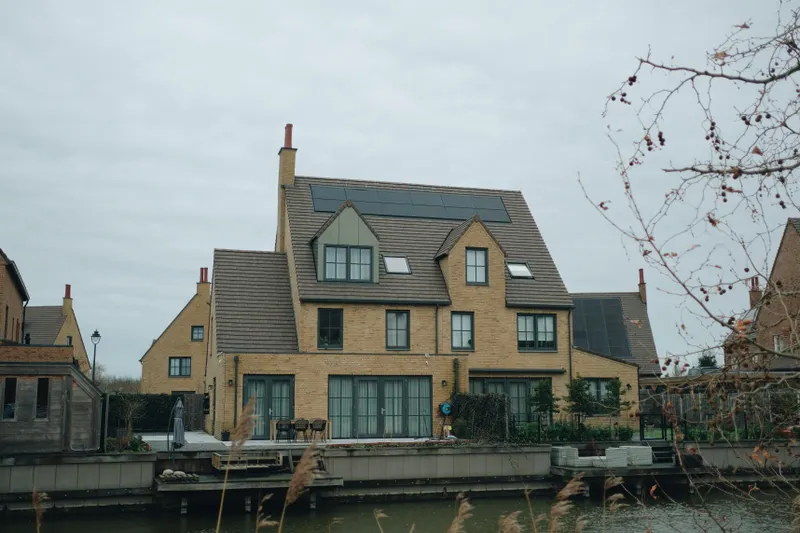
Jávea is the most obvious place to start if the brief is a villa or substantial second home rather than the lowest possible entry price. Idealista's Dutch-demand analysis identified Jávea/Xàbia as the single most popular Spanish destination among Dutch users searching on its platform.
The attraction is easy to understand at property level: established villa zones, large terraces, pools, views, a year-round town, a marina and several distinct micro-locations rather than one homogeneous resort.
But the strength of Dutch demand is not a reason to buy casually. At an area asking-price index of €4,166/m² in September 2026, Jávea is already a premium market. The villa's road position, plot, renovation quality, legal documentation, orientation and view protection can create a very large gap between two houses marketed with the same number of bedrooms.
For a serious Dutch buyer, Jávea makes most sense when the property itself is central to the lifestyle and the budget is high enough to reject compromised access, outdated construction or an inflated sea-view premium.
Moraira: Better for the Buyer Who Wants a Smaller, More Premium Market
Moraira should be compared with Jávea, but not treated as a smaller version of it. The market is more compact and heavily associated with detached villas, lower-density residential areas and a high-value international buyer base.
Its September 2026 asking-price index stood at €4,474/m², the highest among the areas in this article. El Portet-Pla del Mar and Moravit-Cap Blanc were both around the high-€4,000s per square metre on the same portal index.
That makes Moraira a weak choice for somebody whose first priority is maximum square metres for the budget. It is a stronger choice for a buyer who deliberately wants a quieter villa environment and is prepared to pay for scarcity, plot, privacy and proximity to a smaller coastal centre.
The danger is paying the Moraira premium without receiving the attributes that justify it. A dated villa on a compromised road with limited outdoor space is not automatically a good purchase because the postcode is desirable.
Calpe: A Strong Compromise Between Apartment Choice and Northern Costa Blanca Lifestyle
Calpe can work particularly well for Dutch buyers who like the northern Costa Blanca but do not need a large detached villa. The market has a stronger high-rise and apartment component than Moraira, while still offering villas in surrounding residential areas.
At €3,496/m² in the September 2026 asking-price index, Calpe sat below Jávea and Moraira but above the province-wide average. That can create a useful middle ground: sea views and a recognisable coastal destination without automatically moving into the highest northern-Costa-Blanca price bracket.
For an apartment buyer, compare building age, lift capacity, parking, community fees, pool and common-area costs, orientation, summer traffic and whether the view can be interrupted by future construction. A dramatic balcony does not compensate for an inefficient building or excessive annual charges.
Dénia: Better for Buyers Who Want a Real Town as Well as the Coast
Dénia deserves a place on the shortlist when year-round usability matters more than buying into the most recognisable Dutch hotspot. It combines a functioning town, marina, restaurants, services and extensive coastal residential areas.
Its September 2026 asking-price index was €3,354/m², placing it below Calpe, Jávea and Moraira. That does not make every Dénia property better value, but it means a buyer can compare a different type of proposition at the same budget.
For Dutch households expecting long stays, remote work or gradual relocation, Dénia can be more practical than a purely villa-led search. The trade-off is that the exact micro-location matters enormously: town-centre apartments, marina-area property, beachfront urbanisations and villas around Montgó should not be valued as one market.
Alicante City and Playa de San Juan: The Strongest Relocation-Led Choice
Alicante is the most different option in this comparison because it is a city first and a holiday market second. That can make it the strongest choice for Dutch buyers who want to spend most of the year in Spain, work locally or remotely, use public services frequently, or simply prefer normal urban life to resort ownership.
The city-wide September 2026 asking-price index was €2,743/m², but the coastal districts are materially more expensive. Playa de San Juan-El Cabo averaged €3,867/m², while Playa de San Juan itself was €4,149/m².
This is a good illustration of why "Alicante city" is too broad for a property brief. A central apartment, a modern beachside home in PAU 5, a property in Cabo de las Huertas and a family apartment near Alicante Golf serve very different buyers.
For a relocation-oriented Dutch buyer, Alicante's advantage is repeatable everyday use. For a buyer whose reason for owning in Spain is a private pool, large garden and low-density villa environment, the northern Costa Blanca will usually be more convincing.
Torrevieja: The Strongest Starting Point for a Lower-Budget International Search
Torrevieja remains one of the biggest international property markets on the Costa Blanca and is also one of the areas highlighted in Idealista's Dutch-demand analysis.
Its September 2026 asking-price index was €2,561/m², below the province average and substantially below Jávea or Moraira. For a Dutch buyer, that can mean more choice among apartments, townhouses and developments without pushing the property budget into premium-villa territory.
The main risk is treating international popularity as proof of quality. Torrevieja has a large and varied housing stock. Building condition, distance to services, community fees, parking, noise, road access and the amount of similar property competing for future buyers can matter more than the town-level average.
A well-located resale apartment with sensible annual costs can be a much stronger purchase than a newer unit chosen purely for a pool and marketing package.
Orihuela Costa: Better for Golf, Urbanisations and New-Build Choice
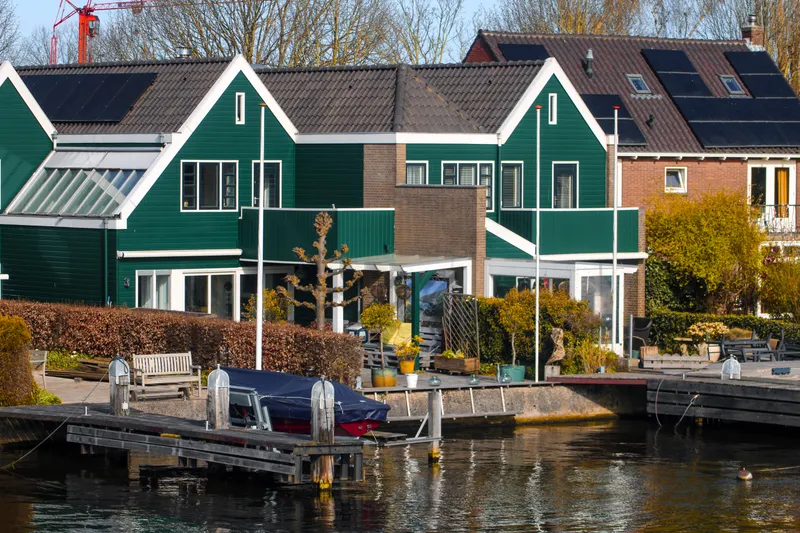
Orihuela Costa deserves separate treatment from Torrevieja. Its market is more dispersed across coastal communities and golf-oriented residential areas, with a strong mix of apartments, townhouses, villas and new developments.
The September 2026 asking-price index was €3,058/m². Micro-locations varied: Cabo Roig and Campoamor were both above €3,200/m², while other sectors sat lower.
For a Dutch buyer who wants a managed development, golf access or a newer low-maintenance property, Orihuela Costa can be easier to match than Jávea or Moraira. The trade-off is greater dependence on the specific urbanisation and car-based routine.
Before buying in a managed development, obtain the current community budget and fees, ask about reserve funds and planned works, and understand whether short-term rental activity or high owner turnover changes the character of the community.
Dutch Buyers Have an EU Residence Advantage - but Property Ownership Is Separate
Dutch citizens are EU citizens, so the immigration calculation is very different from that of British, American or other non-EU buyers.
For stays of less than three months, Spain's current rules require only a valid passport or national identity document for EU citizens. If a Dutch citizen intends to reside in Spain for more than three months, registration in the Central Register of Foreigners is required within three months of entry, provided the relevant conditions for residence are met.
Those conditions depend on the person's situation - for example employment, self-employment, study, or sufficient resources and health cover. Buying a house does not replace the residence-registration process.
For a Dutch buyer considering a gradual move from second home to main residence, this flexibility is commercially important. It is still sensible to separate three decisions: the right property, Spanish residence administration and cross-border tax planning.
Purchase Tax Changed in the Valencian Community in 2026
This is one area where buyers should ignore old guides. The general Valencian transfer-tax rate on resale property changed from 10% to 9% for taxable events from 1 June 2026. However, where the taxable value of the real estate exceeds €1 million, the rate remains 11%, subject to the detailed rules and any specific relief that may apply.
So if the taxable base on a resale is €500,000, the headline ITP at the general rate is €45,000. If the taxable base is €1.2 million and the 11% rate applies, the headline ITP is €132,000. These examples exclude legal, notarial, registry, finance and other transaction costs.
New homes follow a different route. A first delivery of residential property from a developer is generally subject to 10% VAT. In the Valencian Community, the current general AJD rate is 1.4% in cases where no reduced rate applies; qualifying habitual-residence acquisitions can receive different treatment, including a 0.1% AJD rate under the current regional law.
For a Dutch second-home buyer, the practical lesson is simple: do not give an agent only the maximum property price. Give the maximum all-in acquisition budget and have a Spanish tax adviser or lawyer calculate the transaction before a reservation is treated as affordable.
Resale or New Build? Dutch Buyers Should Compare Certainty Against Convenience
A large part of the Costa Blanca market is marketed through new-build developments, particularly in the south and in selected growth corridors. New property can be attractive for Dutch buyers who want modern energy performance, low initial maintenance, communal facilities and staged payment terms.
The counterpoint is that a completed resale allows the buyer to inspect the actual road, noise, view, community, build quality, landscaping and surrounding construction. It also provides evidence on running costs rather than estimates.
- For a new build, verify planning status, completion terms, bank guarantees or other payment protections and what is actually included in the specification.
- For a resale, check title, charges, planning history, community debts and whether alterations, pools or extensions are correctly documented.
- For either, compare total annual ownership cost rather than purchase price alone.
- Do not pay a sea-view premium without checking what may legally be built on neighbouring land.
- If rental income is part of the plan, verify the current regional, municipal and community rules for the exact property before relying on projected income.
A Better Shortlist for a Dutch Buyer
Instead of asking an agent for "the best property on the Costa Blanca", build a shortlist that deliberately tests different lifestyles at the same all-in budget.
| If your priority is... | First area to test | Second area to test | What to compare |
|---|
| Detached villa and outdoor living | Jávea/Xàbia | Moraira | Plot, privacy, renovation, sea view, access |
| Long-stay town life with coast | Dénia | Alicante / Playa de San Juan | Walkability, healthcare, shopping, winter use |
| Sea-view apartment | Calpe | Playa de San Juan | Terrace, parking, community fees, view protection |
| Lower entry budget | Torrevieja | Orihuela Costa | Annual costs, building quality, resale competition |
| Golf and managed community | Orihuela Costa | Selected Alicante Golf / south-Costa Blanca options | Community fees, car dependence, rental rules |
This approach is more useful than starting with one town because a friend already owns there. A property purchase should fit your routines, not your social media feed.
What to Send Before Asking for Properties
A good local partner can narrow Alicante province very quickly if the brief is specific. Send:
- maximum property price and maximum all-in acquisition budget;
- apartment, townhouse or detached villa preference;
- minimum bedrooms and approximate internal area;
- whether private outdoor space or a communal pool is enough;
- second home, relocation, retirement or investment use;
- how many months per year you expect to occupy the property;
- new build, resale or either;
- importance of walkability versus willingness to drive;
- whether Dutch-speaking community or services matter to you;
- whether rental income is important;
- purchase timeframe and whether you are ready to travel for viewings.
Those answers will usually eliminate more unsuitable property than another hundred portal listings.
The Decision: Alicante Works Because It Is Not One Market
The rise in Dutch demand should not push buyers toward a single "Dutch area". It should do the opposite: it confirms that Alicante province is deep enough to support several very different buyer profiles.
Jávea and Moraira are the strongest starting points for a villa-led buyer. Calpe offers a useful apartment-and-villa compromise. Dénia makes sense for longer stays and year-round town life. Alicante city is the urban relocation choice. Torrevieja and Orihuela Costa are stronger when value, development choice and lower-maintenance ownership matter more than exclusivity.
The Dutch buyer advantage is that there is already substantial market depth and community presence. The risk is letting that familiarity replace due diligence. The right area still depends on the exact property, its legal position, the all-in cost and how you will use it after the first holiday feeling has worn off.
Contact AntalyaEstate with your maximum property budget, maximum all-in budget, preferred property type, intended use, areas you already like and purchase timeframe. AntalyaEstate can help refine the Costa Blanca brief and, where appropriate, introduce a trusted local property partner for current options. Property-specific legal, tax, technical and residence advice should remain with the appropriate independent professionals.