
For a long-term international property investor, Dubai is still the stronger default market if liquidity, data depth, resale choice and a broad tenant base are the priorities. Abu Dhabi is the more interesting alternative if you are willing to accept a smaller market in exchange for stronger current price and rent momentum, rapidly rising foreign participation and exposure to a development cycle that is still expanding.
That is not the same as saying Dubai is safer and Abu Dhabi is riskier. The risks are different. Dubai's main challenge in 2026 is a large delivery pipeline and a market that has become more selective after several years of sharp growth. Abu Dhabi's main challenge is concentration: off-plan sales dominate, a relatively small number of projects and developers account for a large share of activity, and future supply is heavily focused on a handful of investment districts.
For a five- to ten-year investor, the right question is therefore not which emirate has the higher headline growth rate this year. It is which market gives the specific property the strongest combination of tenant demand, supply discipline, acquisition price and future exit liquidity.
The Short Answer: Dubai for Depth, Abu Dhabi for Earlier-Stage Growth
| Investor priority | Dubai | Abu Dhabi | Stronger starting point |
|---|
| Market depth and transaction liquidity | Very deep, highly international, broad ready and off-plan stock | Smaller but growing rapidly | Dubai |
| Current 2026 price momentum | Moderating after strong prior growth | Much stronger year-on-year growth in current data | Abu Dhabi |
| Rental depth | Very large and diversified tenant base | Deep resident-led rental market with strong investment-zone demand | Dubai, with Abu Dhabi increasingly competitive |
| Ready-property choice | Extensive across many districts and towers | Good but narrower in key investment zones | Dubai |
| Off-plan dominance | Major part of the market | Extremely dominant in 2026 | Depends on project |
| Supply risk | High volume of completions can pressure generic units | Large pipeline through 2030, concentrated in selected districts | Both require supply analysis |
| Foreign-buyer access | Foreign ownership in designated freehold areas | Investment zones open to all nationalities; 50 zones by H1 2026 | Both |
| Luxury resale audience | Exceptionally broad global buyer pool | Smaller, more concentrated around prime islands and districts | Dubai |
| Long-term growth optionality | Mature global city with broad demand engines | Smaller base, rising foreign capital and new investment zones | Abu Dhabi |
| Best fit | Liquidity-first investor | Growth-and-scarcity investor | Investor objective decides |
The table is intentionally about fit rather than a forecast. A weak apartment in the supposedly stronger market is still a weak investment.
2026 Has Made the Comparison More Interesting
The two emirates are at different points in the cycle. CBRE's second-quarter 2026 review described Dubai's residential market as moderating: average residential sales prices were still 1.9% higher year on year, but rents were 2.6% lower and transaction volumes fell materially compared with the same quarter of 2025.
Abu Dhabi moved in the opposite direction over the same period. CBRE estimated residential values were 21.6% higher year on year in Q2 2026, with apartment prices up 24.4% and rents up 3.6%. Residential sales value reached about AED 32 billion in the quarter, roughly 150% above Q2 2025.
These figures do not prove that Abu Dhabi will outperform Dubai over the next decade. They show that the two markets are currently offering different entry conditions. Dubai gives a buyer more negotiating room in a mature market. Abu Dhabi gives a buyer stronger momentum, but that momentum is already being reflected in pricing.
For Dubai, buyers can test individual transactions directly through the Dubai Land Department real-estate data service. For Abu Dhabi, the ADREC market-report library publishes registered market data and supply projections.
Dubai's Long-Term Advantage Is Not Growth - It Is Market Depth
Dubai's strongest structural advantage is the number of ways an investor can enter and exit the market. The emirate contains deep ready-property markets, very large off-plan pipelines, established villa communities, branded residences, urban apartments, waterfront stock and a mature brokerage and property-management ecosystem.
The Dubai Land Department reported AED 252 billion of real-estate transactions in the first quarter of 2026, with 60,303 registered transactions. Real-estate investment reached AED 173 billion across 57,744 investments. Foreign investors accounted for AED 148.35 billion of investment value during the quarter.
Those DLD figures cover the wider real-estate market rather than only residential apartments, so they should not be used as a direct comparison with Abu Dhabi's residential-only figures. They do confirm the scale of Dubai's investor ecosystem.
For a long-term owner, scale matters because the exit market is part of the investment. A one-bedroom apartment in a recognised Dubai district can often be compared against many recent transactions and marketed to a wide international buyer pool. That does not guarantee liquidity, but it gives the investor more evidence and more potential counterparties.
Abu Dhabi's Long-Term Advantage Is That Foreign Participation Is Expanding Quickly
Abu Dhabi is no longer a market that international investors can treat as secondary. ADREC reported total real-estate transactions of AED 117 billion in the first half of 2026, up 112% year on year, with foreign direct investment of AED 13.8 billion from non-resident investors representing 116 nationalities.
More important for residential buyers, resident expatriates and non-resident foreign buyers together accounted for 70% of residential sales value in the first half of 2026. ADREC also approved eight new investment zones during the period, bringing the total to 50.
The official ADREC H1 2026 market report summary records residential sales of AED 70.4 billion, with investment zones holding more than 22% of the emirate's residential stock.
For a long-term investor, the attraction is not simply that Abu Dhabi is growing. It is that the foreign-buyer base is broadening at the same time as the investable geography is expanding. That can create more future buyers and tenants if the individual property sits in a district with genuine employment, lifestyle or scarcity advantages.
Dubai Is Easier to Underwrite Because More of the Market Already Exists
A ready-property investor in Dubai can inspect a mature tower, pull recent sales, check current rents, review service charges, compare building management and see what competing stock is already on the market.
That does not make Dubai easy. Building quality can vary dramatically even within the same district. But the investor has more completed evidence.
This is why AntalyaEstate's Business Bay vs Downtown Dubai ready-property comparison focuses heavily on tower-level economics rather than treating an area average as an investment conclusion.
For a conservative long-term investor, that visibility can be worth more than a higher advertised growth rate. You are buying a market that has already developed many of the institutions and transaction habits you may eventually rely on when selling.
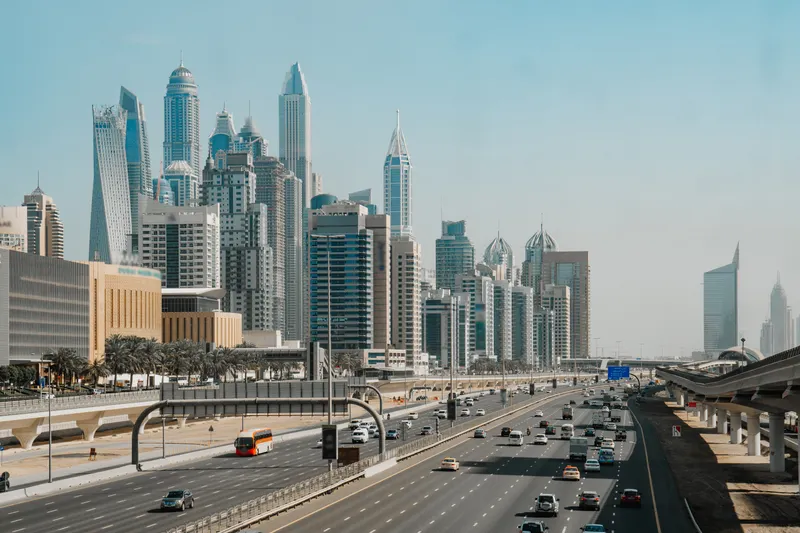
Abu Dhabi Requires More Project-Level Discipline Because Off-Plan Dominates
ADREC's H1 2026 figures show just how development-led Abu Dhabi has become. Off-plan transactions represented 89% of residential sales value and 82% of residential deal volume. Ten developers accounted for 90% of primary off-plan sales value, and ten projects alone accounted for 43% of total residential unit sales.
That concentration is not automatically negative. It can reflect strong demand for high-quality masterplanned communities. But it means area-level growth can be influenced heavily by major launches rather than by a broad ready resale market.
A long-term Abu Dhabi investor should therefore separate three questions: Is the district strong? Is the developer strong? And is this specific unit priced well relative to the completed market it will eventually join?
The existing AntalyaEstate comparison of Al Reem Island vs Al Maryah Island shows how different those micro-markets can be even within Abu Dhabi's main international investment zones.
Supply Risk Looks Different in the Two Markets
Dubai's supply risk is visible now. CBRE estimated approximately 18,000 residential units were completed in the first half of 2026, and other major research houses have also reported a much heavier handover phase as projects launched during the previous boom reach completion.
That can pressure generic apartments, especially where several towers complete with similar one-bedroom and two-bedroom layouts in the same period. For a long-term investor, the defence is to buy something the next tenant or buyer can distinguish: superior walkability, better view, larger net area, stronger building management or a meaningfully lower entry price.
Abu Dhabi's supply risk is more forward-loaded. ADREC projects roughly 71,000 additional residential units across the emirate by 2030, with deliveries expected to peak around 21,800 units in 2028. Six districts are expected to account for 77% of incremental supply.
That makes the development map essential. An apartment in a district with a large pipeline should be priced as part of that future competitive set, not only against today's limited stock.
Rental Demand: Dubai Is Broader; Abu Dhabi Is More Resident-Led
Dubai's rental base is unusually diverse. Tenants include finance and professional-services workers, hospitality and aviation employees, entrepreneurs, families, new residents and shorter-stay international users. That gives a well-located unit several possible tenant profiles.
The downside is that Dubai rents can react quickly when supply expands. CBRE's Q2 2026 data already showed average residential rents down 2.6% year on year, while DLD's first-quarter data still showed very large rental-market activity. A long-term investor should therefore underwrite normalized rent rather than assuming the strongest recent lease can be repeated forever.
Abu Dhabi's rental market is more resident-led. ADREC recorded 233,000 active residential lease contracts in H1 2026 with a total value of AED 9.3 billion. Rental units represented 69% of occupied units in the Abu Dhabi Region.
That is a useful long-term characteristic. A property whose tenant demand is linked to normal residential life, employment and family formation can be less dependent on tourism cycles. The trade-off is that the tenant pool can be more concentrated around specific employment centres and neighbourhoods.
Office and Employment Growth Matter More Than Many Residential Investors Admit
Residential demand is ultimately supported by people who need to live somewhere. In 2026, both cities continued to post strong office fundamentals, but Abu Dhabi's current data are especially relevant around ADGM and central investment districts.
CBRE reported Abu Dhabi office occupancy at roughly 96% in Q2 2026, with office rents nearly 16% higher year on year. ADREC's H1 report put overall and prime/Grade A office occupancy at around 95%, with new lease prices up 13%.
For an apartment investor on Al Maryah or Al Reem, that employment engine is part of the long-term thesis. In Dubai, the equivalent logic can come from DIFC, Business Bay, Downtown, Dubai Marina/JLT, Expo City and other major employment and business clusters.
The correct property is therefore not merely close to an iconic landmark. It should sit inside a repeatable pattern of jobs, schools, transport, services and daily life that can support occupancy through different market cycles.
Luxury Investment: Dubai Has the Deeper Exit Market, Abu Dhabi Has More Concentrated Scarcity
At the high end, Dubai has a much broader global resale audience. Palm Jumeirah, Emirates Hills, Jumeirah Bay, Dubai Hills and prime Downtown or waterfront addresses are already embedded in the international luxury-property market.
Abu Dhabi's luxury story is narrower but compelling. Saadiyat, Hudayriyat, Yas, Jubail and selected Al Maryah/Al Reem projects combine waterfront scarcity, cultural infrastructure, golf, financial-district demand and new masterplanning.
For a long-term investor above the mainstream apartment market, Dubai is usually the easier place to sell a globally recognisable trophy or branded asset. Abu Dhabi can be stronger when the buyer is acquiring genuine scarcity before a district is fully mature - but only if the price already reflects the development risk.
Foreign Ownership Is Available in Both Markets, but the Geography Matters
Dubai allows foreign ownership in designated freehold areas. Abu Dhabi's investment zones are open to ownership by investors of all nationalities, and ADREC reported 50 approved investment zones by the first half of 2026.
For a foreign investor, the practical issue is not whether foreigners can buy in the UAE. It is whether the exact unit sits within the correct ownership framework and whether the title or off-plan registration is being handled properly.
Always verify the property, title status, developer or seller authority, mortgage or charge position, tenancy status and registration route before transferring funds.
Golden Visa Eligibility Does Not Decide Dubai vs Abu Dhabi
The UAE Golden Visa is a federal residence framework, so it should not be treated as a reason to choose one emirate over the other. The current official UAE guidance states that qualifying real-estate investors may obtain a renewable five-year Golden Visa when they own one or more properties with a value of at least AED 2 million, subject to the applicable conditions.
The current requirements are set out on the UAE Government Golden Visa page. Eligibility should be checked against the buyer's exact ownership and financing structure before the property is selected for residence purposes.
For a long-term investor, the residence benefit can be useful. It should remain a filter around a good property, not the investment thesis itself.
Transaction Costs Should Be Compared on the Actual Deal, Not a Social-Media Rule of Thumb
Dubai's official property-sale registration service lists a total registration charge of 4% of the sale value, shown as 2% seller and 2% buyer, plus title, map and registration-trustee fees. Commercial agreements can allocate parts of the cost differently.
The current fee schedule is published on the Dubai Land Department property-sale registration page.
Abu Dhabi uses a separate registration-fee framework and the applicable charge depends on the transaction type. ADREC's current rules include 2% registration for off-plan unit sales, while other sale-registration provisions can differ. A buyer should obtain a written transaction-cost statement for the exact property rather than assuming the Dubai and Abu Dhabi cost structures are identical.
Which Market Is Better for a Ready Apartment Investor?
Dubai has the stronger default case. The ready market is deeper, more buildings have long transaction histories, and it is easier to compare recent sales, rents and service charges across multiple towers before committing.
Abu Dhabi can still be the better purchase where the investor is targeting a well-established building on Reem, Yas, Saadiyat or another mature investment-zone location at a disciplined price. But the universe of ready comparables is generally narrower.
If your strategy depends on being able to sell quickly after three or four years rather than holding through a full cycle, Dubai's greater market depth deserves additional weight.
Which Market Is Better for an Off-Plan Investor?
Neither market wins automatically. Dubai gives you an enormous range of developers, launch stages and payment structures. Abu Dhabi's off-plan sector is currently growing faster and is central to the emirate's investment expansion.
The decision should be made on effective price and future competition. A strong off-plan purchase should still make sense if price appreciation is removed from the model.
- Compare the off-plan price with ready alternatives in the same or a competing district.
- Map all major projects expected to complete in the same 12-24 month handover window.
- Check developer track record, escrow/registration status and contractual delay provisions.
- Treat a payment plan as financing, not as evidence that the property is inexpensive.
- Estimate future service charges conservatively.
- Identify the likely end-user or tenant at handover before accepting a projected rental yield.
Which Market Is Better for a Five- to Ten-Year Investor?
| Investor profile | Dubai bias | Abu Dhabi bias |
|---|
| Liquidity-first apartment investor | Strong - broad ready market and exit audience | Possible, but more building-specific |
| Investor seeking current growth momentum | Moderating 2026 market | Stronger 2026 price and rent growth |
| Investor worried about oversupply | Must avoid generic high-delivery submarkets | Must map 2027-2030 supply in target district |
| Investor buying premium waterfront property | Deep international luxury audience | Scarcity concentrated in fewer prime islands |
| Investor prioritising resident tenant demand | Strong but more diversified and cyclical | Very strong resident-led lease base |
| Investor wanting early-stage district growth | More mature in many prime locations | More compelling in selected expanding investment zones |
| Investor likely to resell remotely | Generally easier due to market depth | Choose only assets with strong local and international demand |
| Investor using Golden Visa | Federal route available | Federal route available |
A Better Way to Compare One Dubai Property With One Abu Dhabi Property
The city comparison becomes useful only when both properties are placed on the same financial sheet.
- Use the same maximum all-in acquisition budget.
- Use actual registered or supportable rent, not marketing rent.
- Deduct service charges, management, maintenance, vacancy and financing before comparing return.
- Compare the number of similar units already for sale and under construction.
- Record whether the property is vacant, tenanted or off-plan.
- Use recent same-building or closest-comparable transactions to test the purchase price.
- Identify the likely tenant and likely buyer in five to ten years.
- Stress-test the investment with flat capital values rather than assuming appreciation.
If the Abu Dhabi property wins only because of a higher projected growth rate, the comparison is incomplete. If the Dubai property wins only because the city is more famous, the comparison is also incomplete.
The Long-Term Decision: Choose the Market Risk You Understand Best
Dubai is the stronger default for a long-term international investor who values liquidity, transparency, transaction depth and a wide future buyer pool. Abu Dhabi is the stronger specialist alternative for an investor who wants exposure to a faster-growing, increasingly international market and is prepared to analyse project concentration and future supply more carefully.
In practical terms, Dubai is easier to buy defensively. Abu Dhabi can offer more upside from district evolution, but it also asks the buyer to make more assumptions about how today's development pipeline will mature.
For either market, the best five- to ten-year property is usually the one with a simple future explanation: why a tenant should choose it, why another buyer should want it and why the surrounding supply cannot reproduce its strongest attributes too cheaply.
Before requesting properties, define the maximum property price, maximum all-in budget, apartment or villa, ready or off-plan, income target, preferred holding period, cash or finance, tolerance for development risk and purchase timeframe.
Contact AntalyaEstate with that brief. AntalyaEstate can help refine the Dubai-versus-Abu-Dhabi decision and, where appropriate, introduce trusted local property partners in either emirate for current options. Property-specific legal, title, financing, valuation and immigration checks should remain with the appropriate licensed professionals before money is committed.