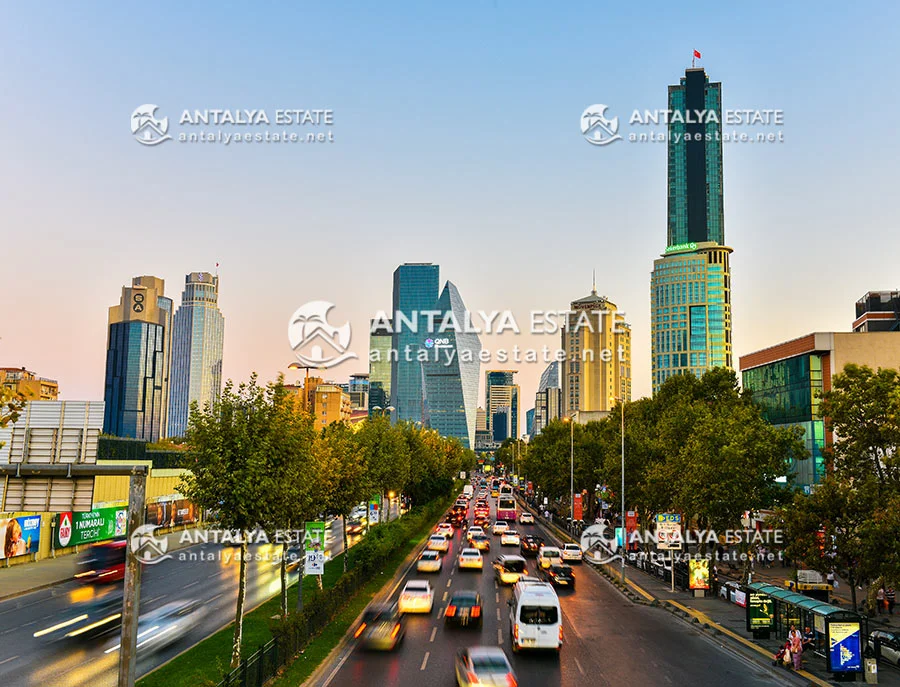
Features of traffic rules in Turkey


Features of traffic rules in Turkey

Continuing the topic of transport in Turkey (read our article "transportation is used in Antalya Turkiye") in this article we will talk about the features of traffic rules in Turkey.
The local population in Turkey drives quite aggressively, drivers often do not follow the rules and honk on every occasion, which can confuse or unbalance. In 87% of accidents on the roads in Turkey are the fault of the driver, so all road users need to be very careful on the roads. Turkey has good quality roads and right-hand traffic.

Also, see the price and conditions of real estate for sale in this city on the property for sale in Antalya.

An overview of the Turkish transportation system

Turkey is among a number of countries that have joined the international Vienna Convention on Road Traffic of 1968, which indicates the standardization of traffic rules. Turkey recognizes the foreign national driver's license of countries that have also joined this convention, so you can use your driver's license for 3 months. If you are planning your stay in Turkey for more than 3 months, take care of obtaining an international driver's license.
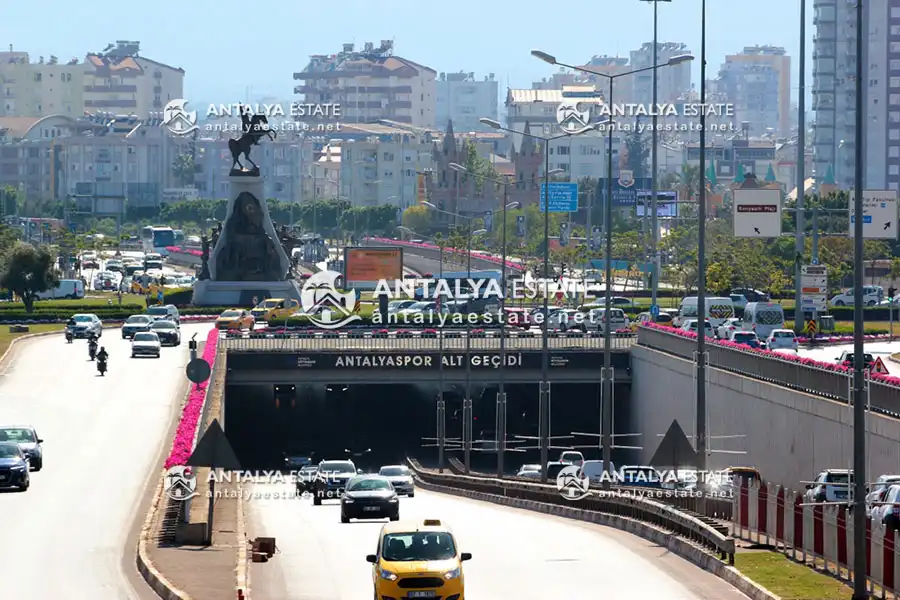
Review of Turkish traffic laws

Turkish driving rules

Traffic rules in Turkey

In addition to drivers, pedestrians are also reluctant to follow the rules of the road - cross the road at a red light, cross the road in the wrong place. You also need to be extremely careful with motorcyclists - they often do not follow the rules of the road, and besides, they are easy to miss. Turkey is a southern country, motorcyclists are here all year round and there are a lot of them.
On the roads you can often meet the traffic police. They can stop absolutely any car for inspection, without any good reason. There is a serious fight against terrorism in the country, so the decision of the police to inspect the car and check the documents should be treated with understanding and patience. You must have the following documents with you: a driver's license, vehicle documents, and a Turkish insurance policy (Zorunlu Trafik sigortası).
Although the rules of the road in Turkey comply with the international standard, there are a number of differences that you need to know.
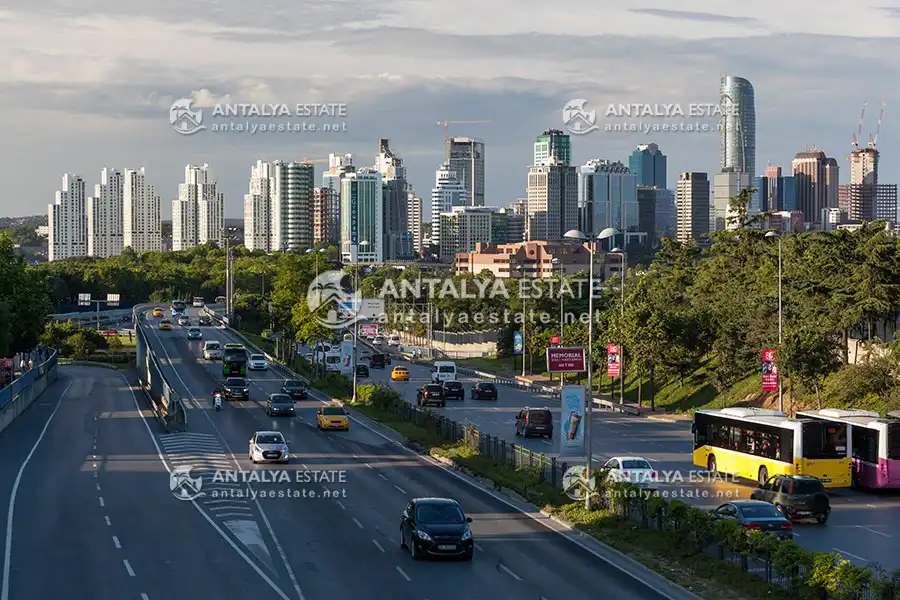
Features of Turkish driving rules

Traffic rules in Turkey

The main features of the rules on Turkish roads:

• Speed limits: in built-up areas - up to 50 km/h, outside built-up areas - up to 90, on toll highways in Turkey - up to 120 km/h.
• Dipped beam during the day is mandatory only in conditions of poor visibility or when driving through tunnels.
• All passengers must wear seat belts. Children under three years of age can only be transported in a car seat in the back seat. Children under 150 cm tall and weighing up to 36 kg are not allowed to sit in the front seat.
• The permitted amount of alcohol in the blood is up to 0.5 ppm.
Road signs also comply with international standards, but there are exceptions:
• Instead of the "STOP" sign, you can see the same design of the "DUR" sign
• "No Parking" sign looks normal, but the same sign, but on a white background, means that parking is allowed, but for a limited time
• At the entrance to the settlement, not only the name is indicated, but also the number of inhabitants
• On signs that warn of ascents and descents, it is not customary to indicate the angle of inclination

Conclusion

We hope that the information we have shared with you in this article will keep you safe, but what should you do if you are involved in an accident? Immediately call the traffic police and call the insurer, and if you rent a car, you must definitely get involved with the owner of the car. While you wait, take pictures of the accident site from all angles.

Contact Antalya Estate Group to receive expert advice on purchasing all types of property in Turkey.



Share This: 

 
5 from 5  (1 votes)
How do you rate this article?
  
5 4 3 2 1

Comments and Reviews

Comment on this article, ask questions:

۰
* Mobile number: (With country code, Example: +905077739292)
Captcha Image

What Can €1.5 Million Buy in Cascais? The Real Property Trade-Offs

A €1.5 million budget can buy a walkable apartment in central Cascais, a larger residence in Estoril, a newer apartment around Parede or a detached home farther inland. This buyer-focused comparison uses 2026 asking-price evidence and real advertised examples, separates purchase price from all-in expenditure, and shows where paying for location, land or condition makes more sense.

read more

Golf-Front Property in the Algarve: When Is the Premium Worth Paying?

Golf-front homes in the Algarve can command an additional price for green outlooks, privacy and scarce plots, but resort addresses and golf membership are not the same as true fairway frontage. A buyer-focused comparison of Quinta do Lago, Vale do Lobo, Vilamoura and other Algarve golf locations, with 2026 asking-price evidence, operating costs, legal checks and a practical method for judging the premium.

read more

What Can AED 3 Million Buy in Abu Dhabi's Main Investment Zones?

AED 3 million does not buy one standard Abu Dhabi property. It may buy a large Al Reem apartment, a waterfront home in Al Raha Beach, a newer Yas Island apartment, a smaller Saadiyat home or a family villa in Al Reef. This comparison uses October 2026 advertised examples, distinguishes ready homes from off-plan resales, and explains ownership checks, transaction costs and the limits of Golden Visa eligibility.

read more

What Can AED 5 Million Buy in Dubai: Villa, Branded Residence or Prime Apartment?

AED 5 million opens several very different Dubai markets. A family-focused townhouse or compact villa can offer outdoor space and privacy, while branded and prime apartments trade some space for centrality, views or managed facilities. This guide compares verified 2026 asking examples, all-in acquisition costs and the questions international buyers should resolve before choosing.

read more

Sea-View Property on the Athens Riviera: When Is the View Worth the Extra Cost?

A sea view can make an Athens Riviera home more enjoyable and more distinctive at resale, but not every glimpse of the Saronic Gulf justifies a large premium. This guide explains how to compare like-for-like homes, how the trade-off changes between Glyfada, Voula, Vouliagmeni and Elliniko, and why an independent planning check matters before paying for a view that may change.

read more

Alicante vs Benidorm for Retirement: Daily Life, Property Choice and Seasonality

Alicante is usually stronger for retirees wanting the depth of a provincial city: varied neighbourhoods, public transport, year-round services and an everyday routine beyond the beach. Benidorm suits those who want a compact resort-city lifestyle with more seafront high-rise choice, an international social scene and an active promenade culture. September 2026 asking prices reveal a meaningful premium in Benidorm, especially Poniente, but the right home depends on the exact street, building and winter routine rather than the municipality name.

read more

How Much Is Puerto Banús Proximity Really Worth to a Property Buyer?

Puerto Banús proximity can improve a second home when buyers genuinely walk to the marina, beach and restaurants. But homes farther into Nueva Andalucía may provide better layouts, plots and privacy. This comparison examines 2026 advertised-price evidence, walkable micro-locations, buyer profiles and the total cost of paying extra for the address.

read more
اقساطی
تخفیف دار


© 2010-2025 Antalya Estate, All rights reserved.

WhatsApp chat
Have a question?