 56
56
There is no single venue type that automatically suits a Cappadocia wedding of 20 to 40 guests. At this scale, several venue models can work well, including cave hotels, terraces, valley settings, boutique properties and restaurant or private dining spaces. The more useful question is not which venue category is best, but how well a specific property's usable spaces, accommodation arrangement and operating model fit a wedding of this size. A guest count of 20 to 40 is a planning scenario rather than an industry or legal threshold, and no property becomes automatically suitable or unsuitable simply because the number falls within this range.
What Changes When the Guest List Is 20 to 40 People?
A guest list of this size changes the practical shape of a wedding day without necessarily simplifying it. Seating and dining layouts need to feel proportionate to the room or terrace being used, since an oversized space can make even a well-organised group look scattered. Ceremony-to-dinner movement can be more compact than at a large wedding, which may reduce transfer time between spaces where those spaces are positioned well. Accommodation can be easier to concentrate in a smaller number of rooms, though this still depends on the specific property's room count and layout. Transport for the group is more manageable than for a large wedding, but still needs planning around vehicle size, parking and drop-off points. Production, from lighting to sound to floral work, can still be extensive depending on what the couple wants. An intimate guest list can support a stronger sense of privacy, but privacy still depends on whether the venue offers exclusive use of its spaces rather than shared access with other guests.
Cave Hotel Wedding for 20 to 40 Guests
A cave or boutique hotel deserves consideration at this guest count because it can bring accommodation and event space into one property. Where rooms, courtyards and terraces are part of the same building or complex, guests can move between preparation, ceremony and dinner without long transfers. Some cave hotels can offer a breakfast or next-morning gathering for a group staying overnight, which can extend the celebration without adding a formal second event. Exclusivity is not automatic. A property may continue to operate other guest bookings alongside a wedding unless the couple specifically arranges exclusive use of the relevant spaces, so this needs to be confirmed directly with the hotel. Layout across multiple levels, common in cave properties, should also be checked for how it affects guest movement, particularly for older guests or anyone less comfortable with steps.
For couples seriously considering this route, our guide to cave hotel wedding in Cappadocia covers buyout terms, room-block mechanics and the specific questions to raise with a hotel before booking.
Terrace Venue for an Intimate Cappadocia Wedding
A terrace can suit a wedding of this size where the couple wants a view-led setting without the scale of a large outdoor property. The practical questions are less about the view and more about how the space functions: the usable floor area once tables, a dance floor and a service route are in place, whether the terrace can accommodate both ceremony and dinner or only one of the two, and how catering staff move between kitchen and terrace without crossing guest areas. Wind exposure and sound should be checked directly with the property, since terraces vary considerably in how sheltered they are. A workable backup space, in case of poor weather, needs to be confirmed rather than assumed. Access, including any steps between the terrace and the rest of the property, is also worth considering for guest comfort.
Valley or Outdoor Setting for 20 to 40 Guests
A valley or open-air setting can suit a ceremony-focused wedding, particularly where the couple wants a Cappadocia landscape as the backdrop for the vows rather than for the full reception. Guest transport needs planning to a location that may not have on-site parking. Toilet and service infrastructure is not part of an open landscape by default, so it needs to be arranged separately. Catering logistics also need attention for a site without a kitchen. Power for lighting, sound or a band should be confirmed as either available on-site or brought in. Weather backup is particularly important for an outdoor ceremony, since the setting itself provides no indoor alternative unless one has specifically been arranged nearby. Guest movement after the ceremony, to a separate dinner venue, should be planned so that transfer time does not eat into the evening.
Boutique Property or Small Hotel Buyout
A boutique property or small hotel buyout can work well at this scale where the couple wants accommodation, preparation, ceremony, dinner and a following morning gathering to sit within or around one property. This is a separate question from the detailed buyout and room-block terms that apply to any specific hotel; here the point is whether the venue model itself fits the wedding. Exclusive use is not automatic and should be confirmed directly with the property, including exactly which spaces are included.
Where an evening continuation is planned beyond the main reception, this is treated as an after-party rather than an extension of the wedding programme itself. In Ramarossi's operational experience of Turkish wedding-venue practice, the main wedding and reception programme is normally structured to finish at approximately 00:00, and an after-party may continue later, commonly to around 02:00, only where the specific venue and specific space are permitted and contractually able to operate at that time. If outdoor amplified music is permitted after 00:00, the after-party may continue outdoors within that permission; otherwise it may need to move to an authorised indoor or enclosed space. These are not universal statutory finishing times, and the exact arrangement needs to be confirmed with the specific property in writing.
Restaurant or Private Dining Buyout
For a group of 20 to 40, a restaurant or private dining buyout can make sense where the couple wants a dinner-led celebration rather than a full wedding production. Before choosing this route, it is worth clarifying whether the ceremony itself can take place at the restaurant or only the reception, whether dancing is realistic given the layout and any noise considerations, and how much production, lighting or sound the space can accommodate. Privacy depends on whether the restaurant is reserved fully for the wedding or only in part. Setup and breakdown windows at a working restaurant can also be more limited than at a dedicated event venue, which affects how much decoration or staging is realistic. This model suits couples who want a well-hosted dinner celebration more than a full wedding format, and it is worth being clear with the restaurant about which of the two is intended.
How to Judge Whether a Venue Feels Right for 20 to 40 Guests
Advertised maximum capacity does not, by itself, indicate whether a space will feel right for a wedding of this size. A space that comfortably holds a large standing reception can still feel poorly proportioned for a seated dinner and dancing with an intimate group. The more useful question is how the space performs at the couple's actual numbers: whether ceremony seating fits without excessive gaps or crowding, whether the dinner layout allows guests to move without squeezing past a bar or a dance floor, where a DJ or band would realistically be positioned, and whether floral or production installations have somewhere sensible to go without overwhelming the room. Service routes for waiting staff, photography sightlines and guest circulation all change depending on how a room is actually laid out for a specific group, not on its stated maximum. A backup layout, for wet weather or an unexpected change, deserves the same standard: whether it genuinely works at the couple's numbers, rather than being simply the only alternative space available. Properties that work well for an intimate wedding are the ones where the couple has walked through the actual layout with their own numbers in mind, rather than relying on a venue's general description.
Accommodation Strategy for an Intimate Cappadocia Wedding
Two broad approaches come up when planning guest accommodation for this size of wedding. The first is concentrating the group in one property that can accommodate most or all of the guest list, which can simplify transport and create a more continuous experience across the wedding weekend. The second is using several nearby properties and coordinating transport between them, which may suit guests with different budgets or preferences for hotel type. Neither approach is inherently better; the right choice depends on room availability at the couple's chosen dates, how guests are travelling, and whether a late finish or an after-party makes a short return distance more important. A welcome gathering or shared breakfast the next morning can work with either model, though it is more straightforward to arrange informally when guests are concentrated in one place. For planning a wedding in Cappadocia more broadly, guest accommodation is one of the areas most affected by dates and property availability, so it benefits from being addressed early.
Guest Movement Matters Even With a Small Group
A smaller guest list makes some aspects of movement easier, but not all of them. Steps, slopes and multi-level properties, all common in Cappadocia, can still be difficult for a group that includes older guests or anyone less mobile, regardless of overall numbers. Movement between ceremony and reception spaces, especially where these are in different parts of a property or a short drive apart, should be timed realistically rather than assumed. Vehicle access for guests, and separately for suppliers delivering flowers, equipment or catering, needs its own route that does not conflict with guest arrival. None of this becomes simpler purely because the wedding is intimate; a property with difficult access remains difficult to access regardless of guest count.
Production and Decor: Small Guest Count Does Not Mean No Production
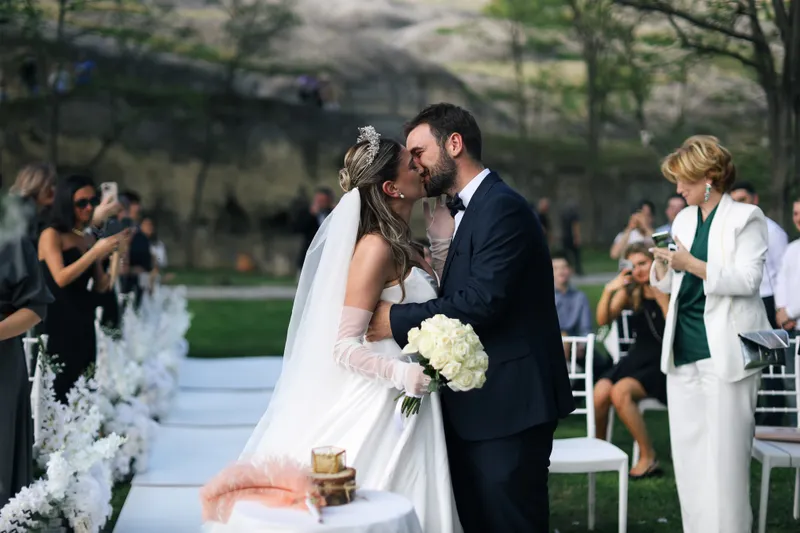
An intimate wedding can still involve a full production brief: ceremony installation, lighting, floral work, sound, a dance floor, table and chair hire, and power for all of it. The relevant question is whether that production is proportionate to the property rather than whether it exists at all. A small terrace may only need modest floral work to feel complete, while a larger valley setting might need more structure simply to define the space. Production should support the venue's actual scale rather than being added for its own sake.
Weather Backup for 20 to 40 Guests
A smaller guest count can open up more potential backup spaces than a large wedding would have access to, simply because fewer square metres are needed. That does not mean any indoor room will do. A backup space still needs to work for the couple's actual numbers, with a workable seating or standing layout, a place for the dance floor if one is planned, and enough space for any production already committed to. Specific weather patterns or probabilities for a chosen date should not be assumed; the practical planning question is whether the backup space itself is genuinely usable, not what the weather is likely to do.
Questions to Ask Before Shortlisting the Venue
- Does the property accept a wedding for our actual guest number?
- Which specific spaces would we use for ceremony, dinner and dancing?
- Would those spaces be exclusive to our wedding?
- How does the layout work at 20, 30 or 40 guests specifically, rather than at maximum capacity?
- What guest accommodation is available on-site or nearby?
- What catering model applies, and can outside caterers be used?
- Are outside suppliers permitted for flowers, lighting, sound and photography?
- What setup and breakdown access and timing are available?
- What power and technical facilities exist for lighting, sound and any staging?
- What is the usable weather-backup space, and does it fit our numbers?
- How do guests move between arrival, ceremony, dinner and toilets?
- Can coaches or taxis reach the property directly, or is a transfer point needed?
- What main-reception and after-party arrangement applies, and until what time?
- What needs to be confirmed with the venue in writing before booking?
Which Venue Model Fits Which Priority?
| Priority | Venue Model That May Deserve Consideration | What Still Needs Confirming |
|---|
| Keep guests together | Cave hotel or boutique property with on-site accommodation | Room count, exclusivity of event spaces, backup layout |
| View-led ceremony | Terrace or valley setting | Access, wind exposure, transport, backup space |
| Dinner-led intimate celebration | Restaurant, private dining or boutique property | Privacy, whether ceremony is possible, dancing and music allowances, setup time |
| Private multi-space celebration | Exclusive-use boutique property or suitable private event property | Actual exclusivity, supplier access, on-site infrastructure |
How Ramarossi Plans a 20 to 40 Guest Cappadocia Wedding
An intimate guest list does not reduce the number of moving parts in a destination wedding; it changes their scale. Ramarossi's role is to define the venue brief around the couple's actual numbers and priorities, shortlist properties that genuinely fit rather than simply photograph well, and compare real layouts rather than advertised capacities. From there, planning covers direct communication with each property, an accommodation strategy suited to the guest list, catering and supplier coordination, decor and production planning, and coordination with photography and entertainment suppliers. Guest transport, timing and a genuine weather backup plan are built around the specific venue chosen, and the wedding-day schedule is coordinated with the venue and every supplier involved. On the day, Ramarossi coordinates between suppliers and the venue so that the couple is not managing logistics during their own wedding. For a wedding of this size, the value is not in finding an attractive venue; it is in making that venue, the guest list, the suppliers and the day's schedule work together properly.
If you are planning a Cappadocia wedding for approximately 20 to 40 guests, Ramarossi can help define the right venue requirements, build a genuine shortlist and coordinate the complete wedding plan around your guests and chosen property. Contact Ramarossi's planning team with your preferred dates, approximate guest count, the type of setting you are drawn to, whether guest accommodation at the venue matters to you, and the overall format you have in mind for the day.
Frequently Asked Questions
Is Cappadocia suitable for a wedding with 20 to 40 guests?
Yes. Cappadocia offers several venue models, including cave hotels, terraces, valley settings and boutique properties, that can suit a wedding at this scale. Suitability depends on the specific property's usable spaces and accommodation, not on the guest count alone.
What type of Cappadocia venue works for an intimate wedding?
There is no single best type. Cave hotels can work well where the couple wants accommodation and event space in one property, terraces suit a view-led ceremony or dinner, and valley settings suit a ceremony-focused outdoor wedding. The right choice depends on the couple's priorities and what the specific property can genuinely offer.
Is a cave hotel suitable for a 20 to 40 guest wedding?
A cave hotel can suit this guest count, particularly where the couple wants guests staying on-site. Exclusivity, room count and layout across different levels should be confirmed directly with the property before booking.
Should all wedding guests stay at the same hotel?
Not necessarily. Concentrating guests in one property can simplify transport and create a more continuous weekend, while spreading guests across several nearby properties can suit different budgets and preferences. Both approaches can work depending on the group and the dates.
Can a large Cappadocia venue still work for a small wedding?
It can, but advertised maximum capacity is not the relevant measure. What matters is how the specific space performs at the couple's actual numbers, including ceremony seating, dinner layout, dance floor placement and backup space.
Can Ramarossi plan the complete wedding for a small guest group?
Yes. Ramarossi coordinates the full planning process for weddings of this size, from venue selection and accommodation strategy through to catering, production, supplier coordination and wedding-day delivery.